This Is What Happens When You Eat Your Way Through Cinque Terre
Imagine colorful villages clinging to rugged cliffs, where the scent of garlic, basil, and fresh seafood fills the air. I wandered Cinque Terre not just to sightsee, but to taste it—every bite a story, every meal a memory. From sun-drenched seaside trattorias to hidden vineyard terraces, the real magic of this UNESCO gem lies on the plate. This is a journey where flavor leads the way. More than a postcard-perfect coastline, Cinque Terre offers a deeply personal encounter with Italian life, one dish at a time. Here, food is not an afterthought—it is the rhythm of daily existence, a celebration of the sea, the soil, and centuries-old traditions passed down through generations.
Arrival in Cinque Terre: A Feast for the Senses
The first glimpse of Cinque Terre stirs something primal in the soul. As the train winds along the Ligurian coast, the five villages emerge like jewels set into sheer rock faces—Manarola’s pastel homes stacked above the harbor, Corniglia perched high on a cliff, Vernazza’s pastel facades glowing in the afternoon light. The air carries salt, wild rosemary, and the faint sweetness of ripening lemons. Immediately, the senses are tuned not just to beauty, but to appetite. Street vendors sell focaccia still warm from the oven, its golden crust crackling under the fingers. Market stalls overflow with plump tomatoes, purple artichokes, and glistening anchovies laid out on beds of ice.
What makes Cinque Terre a culinary destination is not just what’s on the plate, but how deeply food is rooted in the landscape. Terraced hillsides, painstakingly maintained for centuries, grow olives and grapes that yield some of Liguria’s most prized oils and wines. Lemon trees cling to stone walls, their fruit destined for limoncino or fragrant desserts. Fishermen haul in the day’s catch just steps from open-air kitchens. Every element of the region’s cuisine is shaped by geography and tradition. There are no industrial farms here—only small-scale, sustainable practices born of necessity and respect for the land.
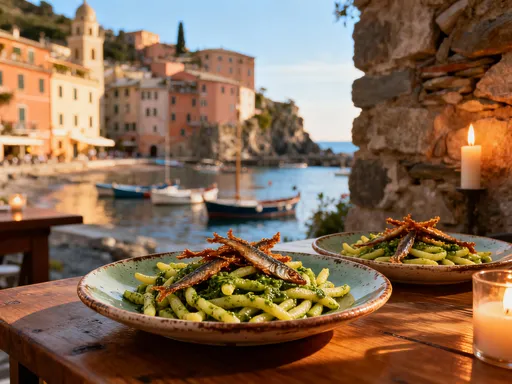
Choosing Cinque Terre as a food-focused destination means embracing slowness. There are no fast-food chains, no drive-thrus, no shortcuts. Meals unfold over hours. A simple lunch might begin with a slice of rosemary-scented focaccia, followed by trofie pasta tossed in fresh pesto, then grilled fish drizzled with local olive oil. Each course is a reflection of place. For the traveler seeking authenticity, this is not just a vacation—it’s a reconnection with how food should be: honest, seasonal, and shared.
The Heart of Ligurian Cuisine: What Defines the Flavors
Ligurian cuisine, the culinary tradition of this coastal region, is defined by restraint and reverence. Unlike the rich sauces of Emilia-Romagna or the bold spices of Sicily, Ligurian food lets ingredients speak for themselves. At its core are four pillars: extra virgin olive oil, fresh herbs, seafood, and handmade pasta. These are not mere components—they are the foundation of a way of eating shaped by the Mediterranean climate and the limitations of mountainous terrain.
Nowhere is this more evident than in pesto alla genovese, the region’s most famous export. True pesto is made with basil from the nearby town of Pra’, where the leaves grow large and fragrant due to the microclimate. Crushed with pine nuts, garlic, Parmigiano-Reggiano, Pecorino Sardo, and the region’s golden olive oil, it is never blended with a machine but traditionally ground in a mortar. The result is a vibrant, aromatic sauce that clings to pasta like sunlight. It is not just a condiment—it is a cultural emblem, protected by the Pesto Championship and even registered with the European Union as a Traditional Specialty Guaranteed product.
Seafood plays an equally vital role. The Ligurian Sea yields anchovies, sardines, octopus, and branzino, often grilled simply or stewed with tomatoes and olives. Drying anchovies on wooden racks is still a common sight in villages like Monterosso, where families preserve them in salt for winter use. These small fish are not just food—they are a symbol of resilience, a way to make the most of what the sea provides. Equally important is the use of wild greens—borage, nettles, and wild chicory—often sautéed with garlic and served as contorni, or side dishes.
Pasta in Liguria is distinct in both shape and preparation. Trofie, a short, twisted noodle made from flour and water, is the traditional match for pesto. Its rough texture holds the sauce perfectly. Another favorite is pansoti, triangular ravioli filled with ricotta and wild herbs, often served with walnut sauce. These pastas are not mass-produced; they are rolled and shaped by hand in home kitchens and small trattorias. To eat Ligurian food is to understand that simplicity is not lack of effort—it is the result of mastery.
Vernazza’s Hidden Trattoria: A Meal to Remember
Nestled in the heart of Vernazza, down a narrow alley lit by strings of warm bulbs, lies a small family-run trattoria that embodies the soul of Cinque Terre’s dining culture. There is no sign, no website, only a chalkboard menu propped in the window. Inside, stone walls bear the marks of centuries, and wooden tables are close enough that laughter from one corner reaches every ear. This is not a place for rushed meals—it is a sanctuary for those who come to taste, to linger, to connect.
One evening, under the soft glow of candlelight, a meal unfolded that remains etched in memory. It began with a platter of fried anchovies, their delicate bones softened in hot oil, served with lemon wedges and a scattering of sea salt. Each bite was crisp, briny, and alive. Next came trofie al pesto, the pasta still slightly warm, coated in a sauce so fresh it tasted like crushed garden herbs. A glass of local Pigato wine, crisp and floral, completed the harmony. Through the arched doorway, the harbor shimmered under a crescent moon, fishing boats bobbing gently in the dark water.
What made this meal unforgettable was not just the food, but the people. The owner, a woman in her sixties with hands weathered from decades of cooking, moved between tables like a hostess at a family gathering. She offered stories with each dish—how her mother taught her to roll trofie, how the basil is picked at dawn, how the olive oil comes from a grove her family has tended for three generations. This was not service; it was hospitality. In a world of impersonal dining, such places are rare treasures.
Seeking out these authentic spots requires patience and curiosity. They are rarely the first restaurant you see when exiting the train station. They are found by wandering, by following the scent of garlic and herbs, by trusting a local’s nod or a handwritten menu in faded ink. But the reward is immeasurable: a meal that feels like belonging, a moment where you are not a tourist, but a guest.
Lunch in Monterosso: Fresh Seafood by the Waves
Monterosso al Mare, the largest of the five villages, offers a more relaxed pace and direct access to the sea. Its long stretch of sandy beach and working marina make it a hub for fishermen and food lovers alike. Along the waterfront, small eateries serve dishes that are as close to the source as possible—some restaurants are just steps from where the boats unload their catch each morning.
One afternoon, lunch was served at a simple wooden table on a deck overlooking the waves. The menu was short: grilled octopus, pan-seared branzino, and a salad of local tomatoes and cucumbers dressed with olive oil and lemon. The octopus, tender and smoky, had been boiled slowly and then charred over an open flame. Each piece offered a contrast of textures—crisp edges giving way to a buttery interior. The branzino, caught that morning, was cooked whole, its skin golden and crisp, the flesh flaking apart at the touch of a fork. A sprig of fresh rosemary had been tucked into the cavity, infusing the fish with a woodsy aroma.
Dining al fresco in Monterosso is more than a convenience—it is part of the experience. The sound of waves, the cry of gulls, the warmth of the sun on your shoulders—all of it enhances the taste of the food. There is a rhythm to seaside eating here: meals begin late, stretch long, and are punctuated by sips of wine and quiet conversation. Time moves differently when you are this close to the water.
For travelers, choosing the right restaurant is key. The most reliable spots are often modest in appearance, with menus written in Italian and prices listed per dish rather than in fixed tourist menus. Look for places where locals eat, where the fish is displayed fresh each day, and where the staff speaks proudly of their suppliers. Avoid restaurants with photo menus or multilingual signage that feels overly commercial. Trusting your instincts—and your nose—will lead you to the best flavors.
Wine and Vista: Tasting the Terraced Vineyards of Corniglia
Corniglia, the smallest and most secluded of the five villages, sits atop a rocky promontory, accessible only by foot or a steep staircase. Its isolation has preserved a quieter, more contemplative way of life—and a little-known tradition of winemaking. The terraced vineyards that climb the cliffs behind the village are among the most dramatic in Italy, their narrow strips of soil held in place by dry-stone walls built by hand over centuries.
These vineyards produce rare wines like Sciacchetrà, a sweet passito made from grapes dried in the sun before fermentation. The process is labor-intensive: each cluster is carefully selected, laid out on mats, and turned daily to ensure even drying. The resulting wine is rich, honeyed, with notes of apricot, fig, and almond. It is traditionally served in small glasses after dinner, often with a piece of almond biscotti. Another local favorite is Pigato, a dry white wine with floral and citrus notes, perfect with seafood.
Visiting a family-run cantina in Corniglia is a lesson in perseverance. The owners, often elderly couples or multi-generational families, speak with pride about their craft. They describe the challenges—erosion, limited access, the backbreaking work of harvesting on steep slopes. Yet they continue, not for profit, but for love of the land and tradition. Tastings are intimate, often held on a terrace with sweeping views of the sea, where the breeze carries the scent of wild thyme.
For visitors, these experiences should be approached with respect. These are not commercial wineries with tasting rooms and gift shops. Many are private homes with small production—sometimes fewer than 1,000 bottles a year. Always call ahead or ask locally before visiting. Purchase a bottle not just as a souvenir, but as support for a fragile agricultural heritage. To drink Sciacchetrà in Corniglia is to taste resilience, patience, and the quiet dignity of those who work the land.
Beyond the Plate: Food as Cultural Connection
In Cinque Terre, meals are never just about sustenance—they are acts of connection. Whether sharing a table with strangers in a crowded osteria or accepting an invitation to a family lunch in a hillside home, food becomes a bridge between worlds. One afternoon, while waiting for a train, a local woman offered a slice of farinata, a chickpea flatbread baked in a wood-fired oven. As we stood on the platform, eating with our hands, she spoke of her childhood in the village, of how her grandmother taught her to make pesto, of how the rhythm of life here still revolves around harvests and tides.
These moments transform travel. Instead of observing culture from a distance, you are invited into it. A recipe shared over coffee, a toast offered in broken English, a child proudly presenting a homemade biscuit—these are the memories that last long after the trip ends. Food, in its simplicity, dissolves barriers. It reminds us that joy, care, and generosity are universal languages.
For many travelers, especially women in the 30–55 age group seeking meaningful, enriching experiences, this kind of connection is invaluable. It is not about ticking off landmarks or taking perfect photos—it is about feeling present, seen, and welcomed. A shared meal becomes a quiet affirmation: you are not just passing through—you are part of the moment.
This is the deeper gift of Cinque Terre’s cuisine. It invites you to slow down, to listen, to savor. In a world that often feels rushed and fragmented, such experiences restore a sense of belonging. They remind us that the heart of travel is not where we go, but how we connect.
Planning Your Own Cinque Terre Food Journey: Practical Tips
Creating a meaningful food journey through Cinque Terre requires thoughtful planning. The villages are small, but their charm lies in exploration—on foot, by train, and through conversation. Begin by arriving with an open mind and a flexible schedule. The best meals are often unplanned, discovered through a recommendation from a shopkeeper or a scent wafting from an open kitchen window.
Transportation is key. The Cinque Terre Train Pass offers unlimited travel between the five villages and is the most efficient way to move around. However, hiking the trails—especially the famous Sentiero Azzurro—adds a layer of immersion. The walk from Monterosso to Vernazza, for example, offers breathtaking views and ends with a well-earned meal at a seaside trattoria. Just be sure to check trail conditions in advance, as some paths may be closed due to weather.
When it comes to dining, balance is essential. Spread your meals across villages to experience their unique flavors. Start with breakfast in Riomaggiore—a warm cornetto and espresso at a café overlooking the marina. Enjoy lunch in Manarola, where a simple plate of trofie and a glass of white wine can be savored on a terrace with one of the most photographed views in Italy. Save dinner for Corniglia or Vernazza, where family-run restaurants offer intimate, unhurried evenings.
To avoid tourist traps, look for authenticity in the details. Menus written entirely in Italian, handwritten daily, are a good sign. So are restaurants without online reviews or social media presence—these are often too busy serving locals to worry about digital marketing. Ask your hotel host or a shop owner for recommendations; their suggestions are usually the most reliable. And don’t be afraid to return to the same place twice—familiarity builds connection.
Finally, travel responsibly. These villages are fragile ecosystems, both environmentally and culturally. Support family-owned businesses, carry reusable water bottles, and avoid single-use plastics. Respect quiet hours and local customs. Remember that you are a guest in a living community, not just a destination. When you honor the place, the place honors you in return.
Conclusion
Cinque Terre isn’t just a place you see—it’s a place you taste, feel, and remember through flavor. The real journey isn’t measured in miles hiked, but in moments shared over a table. When you let food guide your way, you don’t just visit a destination—you truly arrive. Each bite tells a story of the sea, the soil, and the people who have nurtured this land for generations. For the traveler seeking depth, warmth, and authenticity, there is no greater reward. In Cinque Terre, the plate is the portal—and every meal is an invitation to belong.