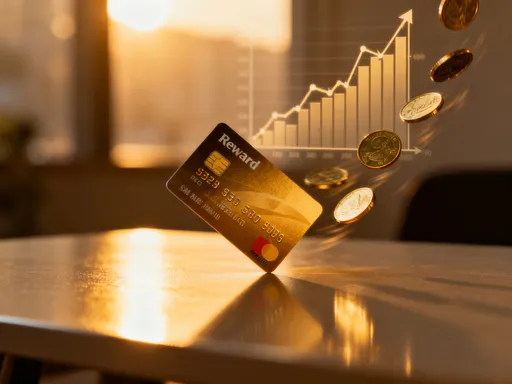
How I Turned My Credit Card from a Debt Trap into a Profit Tool
I used to dread checking my credit card statement—until I realized it wasn’t the card that was broken, it was my approach. What if you could use your credit card not just responsibly, but strategically? I tested methods to shift from mindless spending to smart earning, balancing rewards, interest, and risk. This is how I turned a common financial liability into a tool for real gains—without falling into the trap so many do. For years, like millions of others, I saw credit cards as necessary evils: convenient for emergencies, dangerous for everyday use. The idea of earning money from something that had once buried me in debt felt impossible. But with discipline, planning, and a new understanding of how credit really works, I transformed my relationship with plastic. Now, my cards work for me—not the other way around.
The Hidden Truth About Credit Cards: More Than Just Spending Power
Credit cards are often portrayed as dangerous gateways to financial ruin, but the truth is more nuanced. When used correctly, they are not liabilities but powerful financial instruments. At their core, credit cards offer short-term interest-free loans, provided the balance is paid in full each month. This feature alone makes them valuable tools for managing cash flow. Imagine covering a large but necessary expense—like car repairs or medical bills—without draining your checking account, then paying it off when your next paycheck arrives. That flexibility can prevent overdraft fees and maintain emergency savings.
Beyond cash flow, credit cards play a critical role in building credit history. Each on-time payment is reported to credit bureaus and contributes positively to your credit score. A strong credit score opens doors to better interest rates on mortgages, auto loans, and even insurance premiums. It becomes a silent advocate in your financial life, working behind the scenes to reduce your cost of borrowing. Many people overlook this long-term benefit while focusing only on the risks of debt.
Then there are rewards—cashback, travel points, statement credits, and more. These aren’t just marketing gimmicks; they represent real economic value. When earned responsibly, rewards function like a rebate on spending you were already planning to do. For example, earning 2% cashback on groceries means you’re effectively getting a discount on food for your family. Over time, these small percentages add up to hundreds or even thousands of dollars in savings. The key is recognizing that the card itself isn’t the problem—misuse is.
The shift in mindset begins with reframing the credit card not as a spending tool, but as a financial strategy device. It requires treating every purchase as intentional, every billing cycle as an opportunity, and every reward as a bonus earned through discipline. This perspective change is foundational. Without it, even the best tactics will fail. Once you see your card as a tool rather than a temptation, you begin to unlock its full potential—not just to avoid debt, but to generate tangible benefits.
Why Most People Lose Money (And How to Avoid the Same Mistake)
The reason so many people lose money with credit cards isn’t because the system is rigged—it’s because they misunderstand how it works. The most common and costly mistake is carrying a balance from month to month. Interest rates on credit cards are among the highest in consumer finance, often ranging from 15% to 25% or more. When you carry a $2,000 balance at 20% APR, you’re paying nearly $400 per year in interest alone—money that could have gone toward savings, debt reduction, or family needs. This silent cost erodes any rewards earned and turns the card into a net financial drain.
Another widespread trap is overspending to chase rewards. Some cardholders justify unnecessary purchases because they’ll “earn points” or “get cashback.” But if you spend $100 on something you don’t need just to earn $2, you’ve still lost $98. This behavior distorts the purpose of rewards, turning them from savings tools into justification for waste. The psychological pull of earning something—anything—can override rational decision-making, especially when rewards are marketed as “free money.” In reality, there’s no such thing as free money if it comes at the cost of increased spending.
Misunderstanding terms and conditions also leads to avoidable losses. Many cards offer introductory 0% interest periods, but once that period ends, the rate jumps significantly. Without a plan to pay off the balance before the promotional rate expires, cardholders can be hit with large interest charges. Similarly, annual fees, foreign transaction fees, and late payment penalties add hidden costs that erode value. A $95 annual fee might be worth it if you earn $300 in travel credits, but only if you actually use those credits and don’t incur other fees.
Behavioral habits play a major role too. Swiping a card feels less painful than handing over cash, which makes it easier to lose track of spending. Without a budget or spending tracking system, charges accumulate quickly. One study found that people tend to spend up to 12% more when using cards versus cash. This “pain of paying” effect is real and can sabotage even well-intentioned users. The solution isn’t to avoid cards altogether, but to implement systems that prevent these pitfalls—such as automatic payments, spending alerts, and monthly reviews of statements.
The Art of Maximizing Rewards Without Overspending
Maximizing credit card rewards isn’t about spending more—it’s about spending smarter. The goal is to align your card usage with expenses you would have incurred anyway, turning routine spending into passive income. For example, if you already spend $400 a month on groceries, using a card that offers 3% cashback earns you $12 per month, or $144 per year—without changing your habits. This is the essence of strategic card use: earning rewards on unavoidable expenses.
Different cards offer different reward structures, and understanding these is key to optimization. Some cards provide flat-rate rewards, such as 2% on all purchases, which are simple and reliable. Others offer higher rewards in specific categories—like 5% on gas, 3% on dining, or 6% on pharmacy purchases. These rotating or fixed bonus categories can significantly boost earnings, but only if you use the right card for the right purchase. For instance, using a gas rewards card for fuel and a grocery-focused card for supermarket trips ensures you’re always earning the maximum return.
Sign-up bonuses are another major source of value. Many cards offer substantial incentives—such as $200 cashback after spending $500 in the first three months. These offers can be highly lucrative if approached strategically. The key is to time the spending to match your normal expenses. If you know you’ll be buying school supplies, holiday gifts, or household essentials soon, you can use the new card for those purchases and meet the requirement without overspending. Once the bonus is earned, you can decide whether to keep the card based on its ongoing value.
To avoid confusion, it helps to create a simple system: assign one primary card for everyday spending and secondary cards for specific categories. Label them clearly—“Groceries,” “Gas,” “Travel”—and use them accordingly. This keeps your earning strategy organized and prevents accidental misuse. Over time, this disciplined approach compounds. A family that earns $500 in annual rewards is effectively adding an extra week’s grocery budget back into their household income—without working an extra hour.
Timing Is Everything: Mastering Billing Cycles and Grace Periods
One of the most underutilized advantages of credit cards is the grace period—the time between the end of a billing cycle and the payment due date during which no interest is charged. For most cards, this window is 21 to 25 days. By understanding and leveraging this period, you can essentially borrow money interest-free for nearly a month. This is not free money, but it is free credit, and when used wisely, it enhances cash flow and creates breathing room in your budget.
Consider this scenario: your billing cycle ends on the 10th of the month, and your payment is due on the 1st of the following month. If you make a purchase on the 11th, right after the cycle closes, you won’t need to pay for it until the next due date—giving you up to 50 days of interest-free use. In contrast, a purchase made on the 9th would be due in just 22 days. By timing large purchases just after the cycle ends, you maximize the time your money stays in your account, where it can earn interest or cover other expenses.
This strategy is especially useful for predictable, recurring bills. If you pay for insurance, subscriptions, or utilities, scheduling those payments right after your cycle ends extends your cash flow. For example, paying your $150 phone bill on the 11th instead of the 9th gives you an extra three weeks to manage other obligations. Over time, this small adjustment reduces financial pressure and improves budgeting flexibility.
To implement this effectively, mark your billing dates on a calendar and plan major purchases accordingly. Many banks offer online tools that display your cycle dates and due dates clearly. Some even allow you to change your due date to better align with your paycheck schedule. Pairing this with automatic full payments ensures you never miss a due date or incur interest. When you combine timing with discipline, the credit card becomes a tool for financial efficiency rather than a source of stress.
Balancing Multiple Cards: Efficiency Without the Chaos
Using more than one credit card can increase your earning potential, but it also introduces complexity. The challenge isn’t in having multiple cards—it’s in managing them without confusion. The key to success lies in organization and intentionality. Each card should have a clear purpose: one for travel rewards, one for grocery cashback, one for sign-up bonuses. When cards serve distinct roles, they complement rather than complicate your financial strategy.
Tracking due dates is essential. Missing a payment—even by one day—can result in late fees, interest charges, and damage to your credit score. To stay on top of multiple cards, use a single calendar to record all payment due dates. Set reminders a few days in advance so you have time to act. Alternatively, link all cards to automatic payments from your checking account, ensuring the full balance is paid each month. This eliminates the risk of forgetting and maintains your credit health.
Another consideration is annual fees. Some premium cards charge $95, $150, or even $550 per year. These fees are only justified if the card’s benefits exceed the cost. For example, a card that offers $300 in travel credits, airport lounge access, and free hotel stays may be worth the fee for frequent travelers. But for someone who rarely flies, it’s a waste. Regularly evaluate whether each card still serves your lifestyle. If not, downgrading to a no-fee version or closing the account may be the smarter move.
Finally, avoid the temptation to open too many cards at once. Each new application triggers a hard inquiry on your credit report, which can temporarily lower your score. Experts generally recommend spacing out applications by at least six months. Also, having too many open lines of credit can raise red flags for lenders, even if you manage them responsibly. A well-balanced portfolio of two to four cards is usually sufficient for most households to maximize rewards without unnecessary risk.
Risk Control: Protecting Yourself While Chasing Gains
Every financial opportunity comes with risk, and credit card rewards are no exception. The pursuit of rewards must be balanced with strong safeguards. The first line of defense is fraud protection. Credit cards offer superior security compared to cash or debit cards. If your card is lost or stolen, federal law limits your liability to $50, and most issuers offer zero-liability policies. Still, vigilance is crucial. Regularly review your statements for unauthorized charges and set up transaction alerts to monitor activity in real time.
Equally important is protecting your credit score. While credit utilization—how much of your available credit you use—is a major factor, so is payment history. Even one late payment can cause a significant drop in your score. To prevent this, automate payments and keep balances low. Aim to use no more than 30% of your total credit limit, and ideally below 10% for the best score impact. This shows lenders you’re a responsible borrower and keeps your financial reputation strong.
Spending caps are another useful tool. Decide in advance how much you’ll charge each month based on your budget, not your credit limit. Just because you have a $10,000 limit doesn’t mean you should spend anywhere near it. Treat your card like a debit card—only spend what you can afford to pay back immediately. This mental discipline prevents the slippery slope from convenience to dependency.
Finally, have an emergency plan. If unexpected expenses arise, resist the urge to rely on credit cards unless absolutely necessary. If you do carry a balance temporarily, create a clear payoff plan with a timeline. The goal is to return to full payment as quickly as possible. Remember, the ultimate measure of success isn’t how many points you earn, but how well you protect your financial stability while earning them.
Building a Sustainable System: From Tactics to Long-Term Strategy
Turning credit cards into profit tools isn’t about quick wins—it’s about building a sustainable financial system. The strategies outlined above are most effective when integrated into a consistent routine. Start by reviewing your spending patterns and matching them to the right cards. Automate payments, track rewards, and schedule regular check-ins—quarterly or semi-annually—to assess performance. Are your cards still delivering value? Have your spending habits changed? Is a new sign-up bonus worth pursuing?
Habit formation is critical. Just as brushing your teeth becomes automatic, so can responsible card use. Link card habits to existing routines—like checking your statement when you pay bills or reviewing rewards during your monthly budget meeting. Over time, these actions become second nature, reducing the mental load and increasing consistency.
Align your card strategy with broader financial goals. If you’re saving for a family vacation, direct travel rewards toward that purpose. If you’re building an emergency fund, deposit cashback into a dedicated savings account. When credit card benefits support your priorities, they become more than perks—they become part of your wealth-building engine.
In the end, the transformation isn’t just about money. It’s about confidence. It’s knowing you’ve taken control of a tool that once controlled you. It’s seeing statements not with dread, but with anticipation—of rewards earned, of interest avoided, of progress made. By combining discipline with strategy, you can turn something as ordinary as a credit card into an extraordinary advantage. And that, more than any reward point, is the real profit.